
I wrote this paper for my Diploma of Family History in 2020. I received a High Distinction for this assignment. I hope you enjoy reading it. Jennifer.
My Grandpop, James Prendergast grew up in the Victorian High Plains but was schooled in Bairnsdale. During this time, he joined the Bairnsdale Juvenile band and was taught to play a Cornet by Mr. John White[1].
White was a widely experienced Bandmaster having formed 7 bands in the East Gippsland region.[2] Brass Bands were enjoying their heyday during this time.
The Band’s instruments were donated by wealthy businessmen, purchased with money raised at charity events or earned by the Band when they performed at functions.[3]
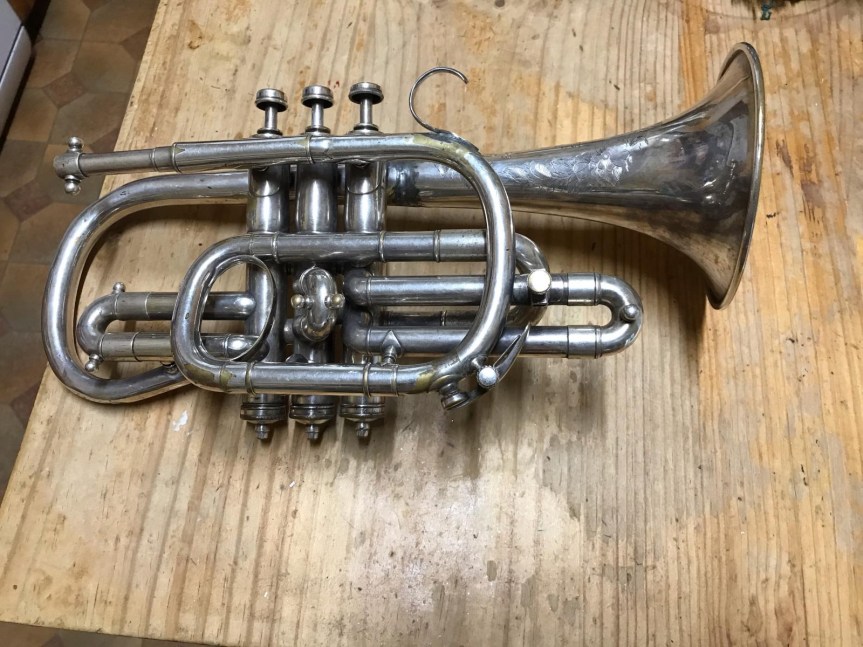
Figure 1. Photograph of the Hawkes & Son Cornet, 2020, owned by James Prendergast 1910-1930, held by Lorna Prendergast, Bairnsdale, Victoria.
The Cornet is a Hawkes and Sons E flat shepherd’s crook cornet – the shepherd’s crook description relates to the rear tube which is shaped like a shepherd’s crook. The conical horn of a shepherd’s crook cornet makes for a rich mellow sound[4].
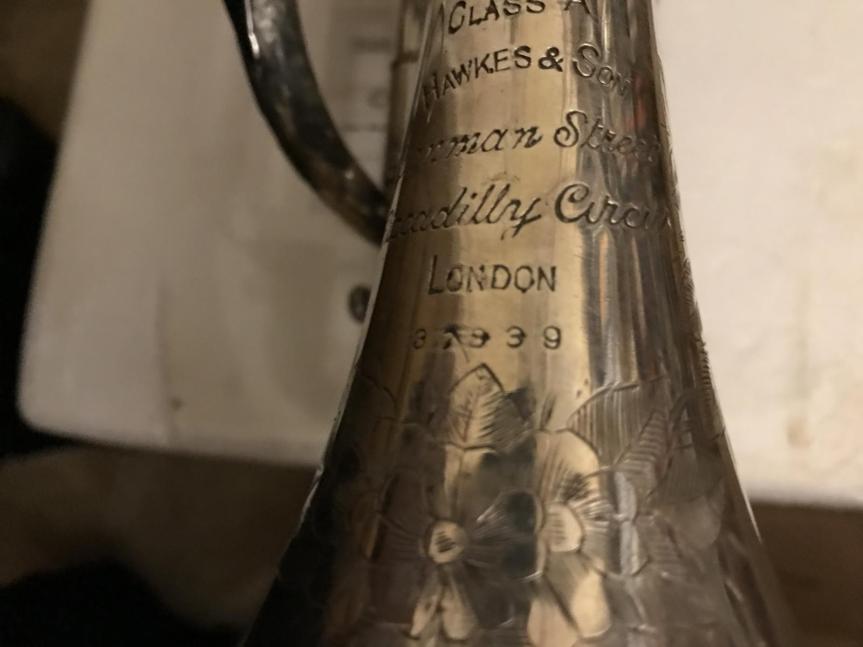
Figure 2. Photograph of Maker’s Mark, C.1910, original held by Lorna Prendergast, Bairnsdale, Victoria.
The Cornet was manufactured by the Company of Hawkes & Sons, Denman Street, Piccadilly Circus, England. It is a Clippertone Excelsior Sonorous Class A Cornet with the serial number 37939[5].
The Hawkes and Sons cornet has been engraved with the serial number 37939, this database (https://www.horn-u-copia.net/serial/Hawkeslist.html) dates the serial number 39782 to the start of 1913, so one would expect that serial number 37939 dates to 1912 or even late 1911.[6] Its base metal construction of Brass has been electroplated silver.
Compared to the Shepherd’s Crook Cornet, an ordinary cornet (pictured below) does not have a rear tube which is shaped like a shepherd’s crook.[7]
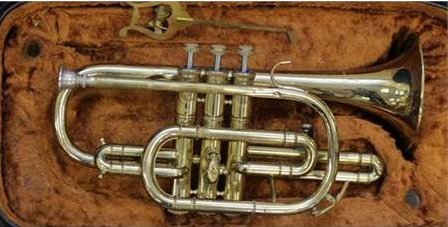
Figure 3. Photograph of the Cornet, 2020, original held by Chris Gannon, AWM, Canberra, ACT.
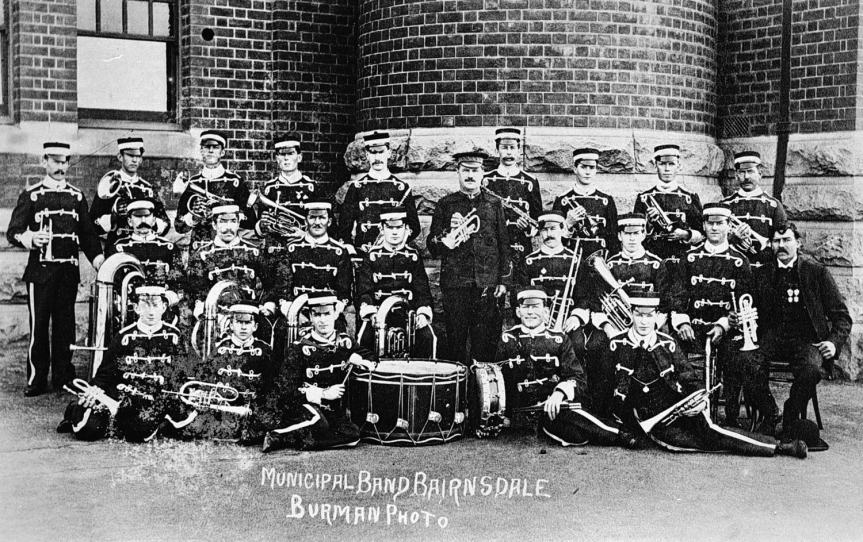
Figure 4. Trove, Burman Studio & Bairnsdale Municipal Band c.1910, Negative – Bairnsdale Victoria, circa 1910, Museum Victoria.
Learning to play the Cornet was difficult as the “Sound on a brass instrument comes from a vibrating column of air inside the instrument. The player makes this column of air vibrate by buzzing the lips while blowing air through a cup or funnel shaped mouthpiece. To produce higher or lower pitches, the player adjusts the opening between his/her lips.”[8]
The teacher Mr. White was a stickler for practise and the need to learn to read music. As James’s talents and the band’s expertise grew, so did the invitations to play at concerts, fetes, hospital charity events, street parades and agricultural shows, sporting events and funerals.[9]
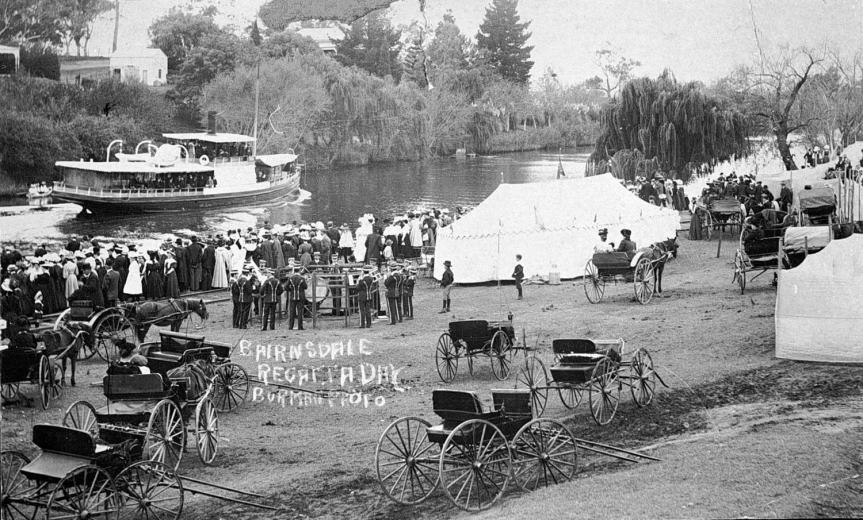
Figure 5. Trove, Burman Studio, 1910, Negative – Bairnsdale, Victoria, Circa 1910. Museum Victoria.
In 1812, James transferred to Melbourne as Guardsman with the Victorian Railways. He took his beloved Cornet with him and played in various bands.
On 14th August, 1914 James joined the AIF Band as a Cornet player and stretcher-bearer.[10]
Bandsmen were trained soldiers expected to support their battalions in Battle.[11] Whilst undertaking some basic military training at Broadmeadows, Sgt James Prendergast also learned first aid[12].
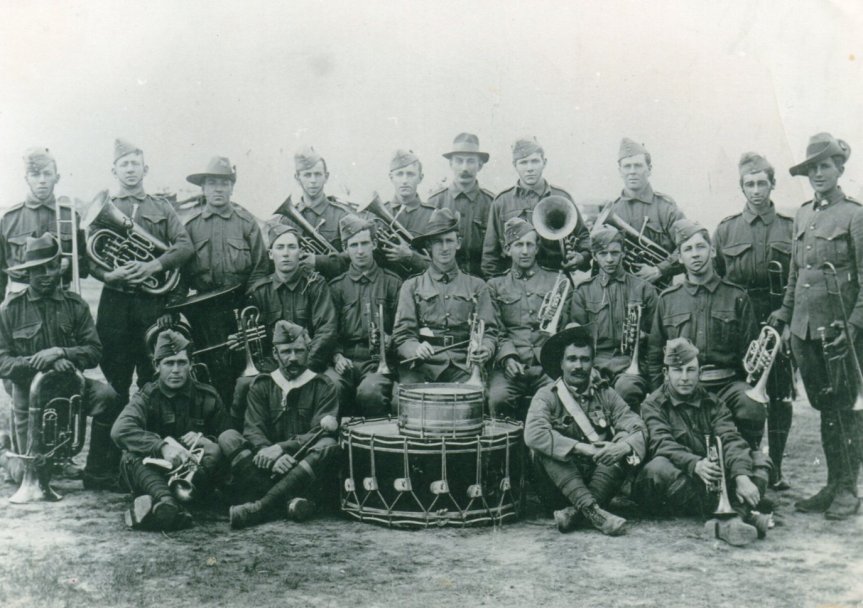
Figure 6. Photograph of the AIF Band Broadmeadows, 1914, original held by AWM, Canberra, ACT
On the troop ship Hononora to Egypt, the Cornet got an airing during church parades and various concerts. Once they arrived in Mena, in between training, the Battalion entertained the troops.[13]
“We arrived in Egypt in 1914 and had a very good band under the conductorship of “Teddy” Robottom wrote James.[14]
In a letter home to his family, a young soldier from North Mudgee, Jack Coliyer told of waking at 5am on Christmas morning to “hear splendid music, a brass band playing Xmas Carols, a hundred yards away from my tent. It was glorious![15]
During the first few weeks in Gallipoli, Prendergast reported his beloved Cornet was locked away from the battlefield.[16]
After about 6 weeks, James was reunited with his precious Cornet. “We did get a great cheer from the men as we marched to our rest camp in Shrapnel Gully, but there was not very much music played on account of the enemy’s shells”[17]
However, the night before the battle of Nek in August 1915, guns gradually fell silent on both sides of the battlefield as Sergeant McMahon played a popular tune called Rosary on his silver cornet[18].
“I don’t know if Grandpop would have been the Battalion Bugler (sounding reveille to wake the troops, the last post to dismiss them at the end of the day, sounding the charge and withdrawal over the din of battle when orders couldn’t be heard but would have been popular playing in formal concerts, church parades, funerals as he was a really talented musician and so he would have been playing it (the Cornet) whenever he was allowed to. Tactically, noise and light discipline is really important, the enemy gunners would randomly shell any area where a lot of noise was coming from as the assumption would be that enemy troops were massed in that spot, so an opportunity target.”[19]
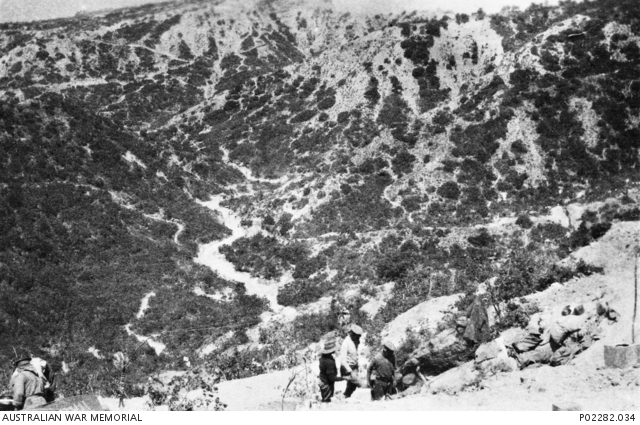
Figure 7. Photograph of Schrapnel Alley, 1915, original held by AWM Canberra, ACT.
By 1916, the importance of Battalion bands was firmly established with orders from various division headquarters requesting that every battalion or brigade should have a “Band of some kind” Battalion bands assisted with maintaining troop Morale and entertained troops when they were out of the lines. [20]
James served in Egypt, Gallipoli and the Western front. The Cornet survived WWI and returned with Grandpop to Australia late 1918.[21]
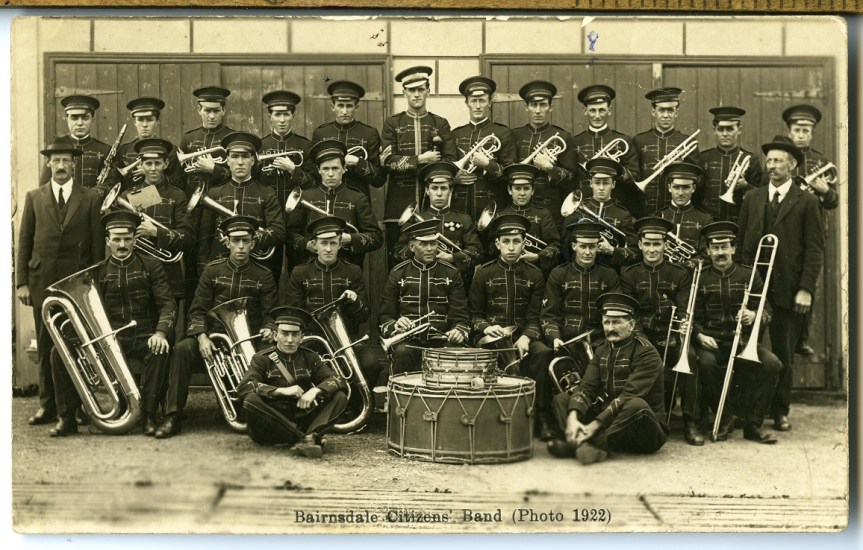
Figure 8. Photograph of Bairnsdale Citizen’s Band, 1922, original held by East Gippsland Historical Society, Bairnsdale, Victoria.
In 1930, South Gippsland Shire Brass Band (SGSBB) purchasing officer attended an auction to buy second-hand instruments for their band. He discovered a Cornet with the engraving “J L Prendergast, Bandmaster 6th Battalion AIF.”[22]
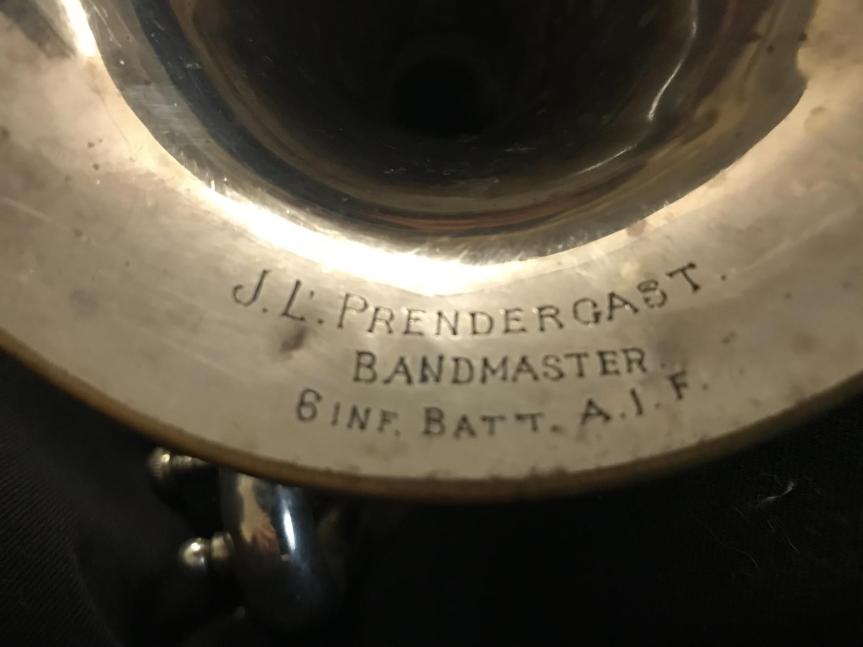
Figure 9. Photograph of engraving on Hawkes & Son Cornet, 2020, original held by Lorna Prendergast, Bairnsdale, Victoria.
In 2001, Mr. Hattam, President of SGSBB, whilst randomly searching for descendants of J.L Prendergast, rang dad who turned out to be the son of J.L. Prendergast.
In an emotional handover, Mr. Hattam presented the Cornet to James Prendergast Jnr. who declared the Cornet a valued family heirloom.[23]
Dad died in 2015 leaving mum custodian of the Cornet. Every year on Anzac day, she allows the East Gippsland Brass Band to borrow the Cornet to play the last post at commemorative services. Cornetist Graham Hall swears “The Cornet plays itself!”[24]
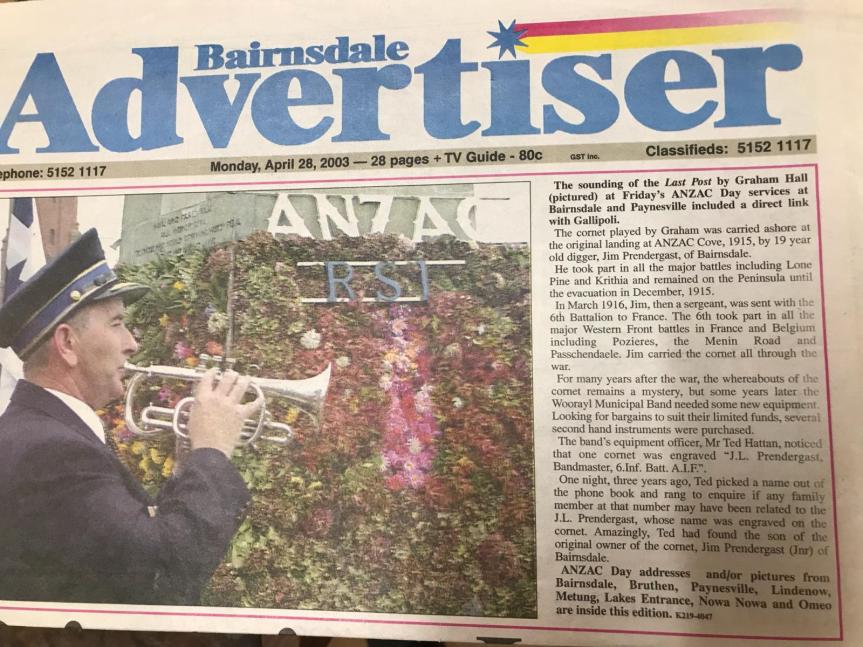
Figure 10. Photograph of Graham Hall playing Hawkes & Son Cornet, 2003, original held by Bairnsdale Advertiser, Bairnsdale, Victoria
[1] ‘The Advertiser’, Bairnsdale Advertiser and Tambo and Omeo Chronicle, 6 December, 1916, p.2 http://nla.gov.au/nla.news-article74178739
[2] Brian M Bagley, ‘Bandmaster White and his association with other Bands’, Bairnsdale Citizens’ Band, 19 April 1986, p.3
[3] ‘Bairnsdale Municipal Band’, Bairnsdale Advertiser, 16 December 1909, http://nla.gov.au/nla.news-article91884666
[4] Chris Goddard to Jennifer Wood, email, 8 October 2020, original held by the author.
[5] Lorna Prendergast, Photograph of the Engraving on the Hawkes & Son Cornet, 8 October 2020, original held by Lorna Prendergast, Bairnsdale, Victoria.
[6] Chris Goddard to Jennifer Wood, email, 8 October 2020, original held by the author.
[7] Chris Goddard to Jennifer Wood, email, 8 October 2020, original held by the author.
[8] www.lutherhigh.org>instrument_info>trumpet_info
[9] https://trove.nla.gov.au/newspaper/article/85206256
[10] Service Record of James Leonard Prendergast, SRN 238, First Australian Imperial Force Personnel Dossiers, 1914-1919, National Archives of Australia, B2455, PRENDERGAST JAMES LEONARD.
[11] Australian War Memorial, ‘Musicians under fire’, 08 September 2017, by Theresa Cronk, https://www.awm.gov.au/articles/blog/musicians-under-fire, accessed 9 October 2020.
[12] Chris Gannon to Jennifer Wood, email, 12 October, 2020, original held by author.
[13] AWM AIF Official histories & Units War Diaries 1914-18 war.
[14] ‘Soldier’s Letter’, Every Week, 27 April 1916, n.p. http://nla.gov.au/nla.news-article153443489
[15] ‘Carcoar Chonicle’, Xmas in Egypt, 19 February 1915, p.2. http://nla.gov.au/nla.news-article103560632
[16] J. Prendergast, ‘Soldier’s Letter’, Every Week, 27 April 1916, n.p.
http://nla.gov.au/nla.news-article153443489
[17] J. Prendergast, Egypt Feb.1, 1916, ’Soldier’s Letter’, Every Week, 27 April 1916,n.p http://nla.gov.au/nla.news-article153443489
[18] Siobhan Heanue, ABC News, Abc.net.au/news/2015-04-11/instruments-play-in-trenches-of-gallipoli-restored-by-the-awm/6385332
[19] Terence Prendergast to Jennifer Wood, text message, 27 October 2020, original held by author
[20] Australian War Memorial, ‘Musicians under fire’, 08 September 2017, by Theresa Cronk, https://www.awm.gov.au/articles/blog/musicians-under-fire, accessed 9 October 2020.
[21] https://trove.nla.gov.au/newspaper/article/74182501
[22] ‘Ted finds cornet’s original owner’ Great Southern Star, 18 April 2001, n.p.
[23] Jim finishes up with father’s wartime cornet, Bairnsdale Advertiser, 5 May, 2001 pp.10-11.
[24] Bairnsdale Advertiser, 28 April, 2003, n.p.
 Families of Ireland